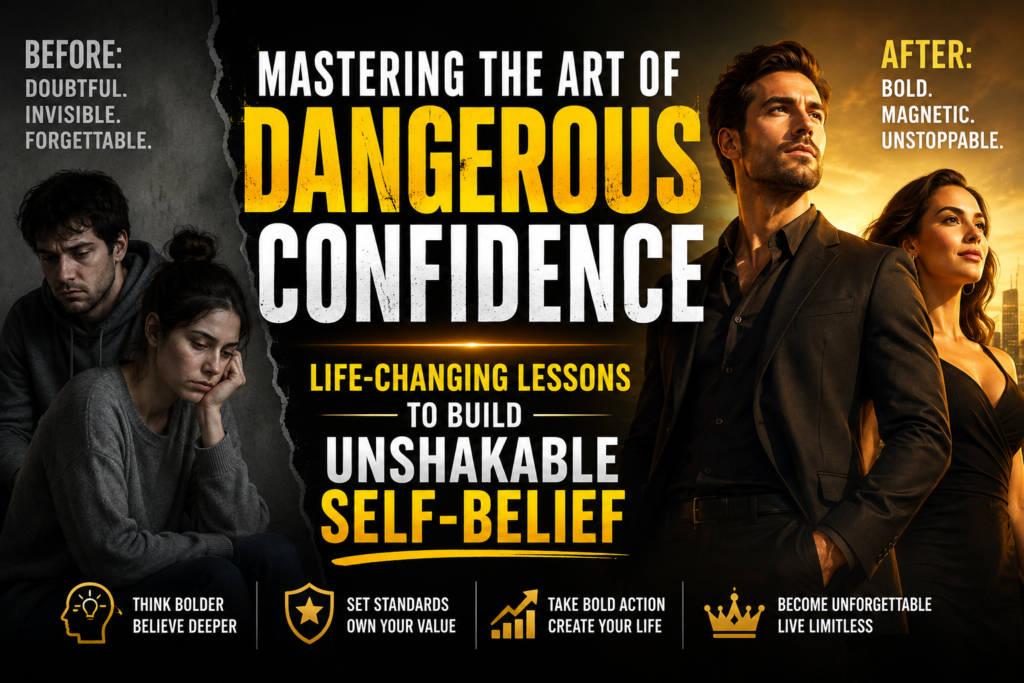
Confidence is one of the most powerful qualities a person can possess. It influences how we think, speak, make decisions, handle challenges, and pursue our dreams. Yet, many people struggle with self-doubt, fear of failure, and the constant need for validation from others.
The concept of “Dangerous Confidence” is not about arrogance or superiority. Instead, it is about developing an unshakable belief in yourself, trusting your abilities, and refusing to let fear or criticism control your life. The lessons from this powerful mindset can help anyone become mentally stronger, emotionally resilient, and more successful.
Confidence Begins Where Self-Doubt Ends
One of the biggest misconceptions about confidence is that confident people never experience fear. In reality, fear and self-doubt are common experiences for everyone, including highly successful individuals.
The key difference is how confident people interpret these feelings.
Instead of seeing fear as a weakness, they view it as a sign that they are attempting something meaningful. If you feel nervous before an important presentation, job interview, business venture, or life decision, it often means you care deeply about the outcome.
Fear is not always an enemy. Sometimes it is evidence that you are stepping outside your comfort zone and growing. When you start viewing self-doubt as a natural part of progress rather than a signal to quit, you transform fear into a source of strength.
Stop Apologizing for Existing
Many people unconsciously weaken their confidence through excessive apologies.
Phrases like “Sorry to bother you,” “Sorry for asking,” or “Sorry for taking your time” may seem harmless, but repeated unnecessarily, they can train your mind to believe that your presence is an inconvenience.
A powerful confidence-building habit is replacing unnecessary apologies with gratitude.
For example:
Instead of saying, “Sorry I’m late,” say, “Thank you for your patience.”
Instead of saying, “Sorry for disturbing you,” say, “Thank you for your time.”
This simple language shift changes your mindset. Rather than focusing on your perceived shortcomings, you acknowledge the kindness and understanding of others while maintaining your self-respect.
Over time, this habit helps build a stronger self-image and reinforces your personal value.
Stop Giving Others Control Over Your Self-Worth
One of the greatest confidence killers is allowing other people’s opinions to determine how you feel about yourself.
The reality is simple: people will criticize you whether you succeed or fail.
Some people criticize because they disagree with you. Others criticize because they misunderstand you. Many criticize simply because criticism is easier than achievement.
If your confidence depends on receiving approval from everyone around you, you will constantly feel insecure.
True confidence comes from internal validation rather than external applause.
You must learn to ask yourself:
Am I acting according to my values?
Am I putting in honest effort?
Am I improving compared to yesterday?
When you answer these questions positively, the opinions of strangers lose much of their power.
The strongest people do not seek universal approval. They focus on personal growth and integrity.
Build Confidence Through Small Daily Victories
Many people wait for a major success before they allow themselves to feel confident.
This approach is a mistake.
Confidence is not created by one big achievement. It is built through hundreds of small victories accumulated over time.
Every time you make a promise to yourself and keep it, you strengthen your self-belief.
Simple examples include:
Reading a few pages of a book every day.
Completing a workout.
Cleaning your room.
Learning a new skill.
Finishing a task you have been postponing.
These actions may appear small, but they send a powerful message to your subconscious mind:
“I can trust myself.”
This self-trust becomes the foundation of lasting confidence.
When your brain repeatedly sees evidence that you follow through on commitments, it becomes easier to tackle larger challenges with certainty.
The Power of Self-Discipline
Confidence and discipline are deeply connected.
Many people believe confidence comes first and action follows. In reality, action often creates confidence.
When you consistently do what you said you would do, your confidence naturally grows.
Discipline creates proof.
Every completed task becomes evidence that you are capable.
Every promise kept becomes proof that you are reliable.
This is why successful people focus on daily habits rather than motivation alone. Motivation comes and goes, but disciplined action continues building confidence regardless of how you feel on a particular day.
Learn to Walk Alone
One of the most powerful lessons in building confidence is learning to be comfortable alone.
Many people depend heavily on approval, support, and validation from others before making decisions.
Confident individuals are different.
They are capable of standing by their beliefs even when others disagree.
They understand that following the crowd is easy, but creating your own path requires courage.
Learning to enjoy your own company develops emotional independence. It teaches you that your happiness and confidence do not depend on constant attention, praise, or companionship.
This does not mean isolating yourself from others. Rather, it means becoming strong enough to stand on your own when necessary.
When you develop this ability, criticism becomes less threatening, setbacks become easier to handle, and your confidence becomes far more resilient.
Develop a Growth-Oriented Mindset
Confident people do not view failures as proof of inadequacy.
Instead, they view mistakes as learning opportunities.
Every successful person has faced rejection, setbacks, and disappointments.
The difference is that they refuse to let temporary failures define their identity.
A growth mindset focuses on questions such as:
What can I learn from this experience?
How can I improve next time?
What skills do I need to develop?
This approach transforms obstacles into stepping stones for future success.
The more you learn from challenges, the stronger your confidence becomes.
Confidence Is a Daily Practice
Perhaps the most important lesson is that confidence is not a destination.
It is a continuous process.
No one wakes up one day with perfect confidence forever.
Instead, confidence is built daily through:
Positive self-talk.
Consistent action.
Small victories.
Personal integrity.
Self-discipline.
Emotional resilience.
Every day offers a new opportunity to strengthen your confidence by keeping promises to yourself and focusing on progress rather than perfection.
Final Thoughts
Dangerous confidence is not about thinking you are better than others. It is about knowing your worth, trusting your abilities, and refusing to let fear or criticism control your life.
When you stop seeking constant validation, replace unnecessary apologies with gratitude, build self-trust through small daily wins, and develop the courage to walk your own path, you create a level of confidence that cannot easily be shaken.
The journey begins with a simple decision: believe in yourself enough to take the next step.
Confidence is not something you wait for. It is something you build, one action at a time.
- Your Mind Is a Sleeping Genie: 7 Surprising Lessons About the Power of the Subconscious Mind
- How to Improve Brain Power Naturally: 15 Science-Backed Habits to Boost Memory, Focus and Mental Performance
- Mount Kailash Mystery Explained: Why the World’s Most Sacred Mountain Remains Unclimbed
- Mastering the Art of Dangerous Confidence: Life-Changing Lessons to Build Unshakable Self-Belief
- Fueling the Mind: The Complete Guide to Brain Health, Memory and Mental Performance