Why Your Brain Needs the Right Fuel
In today’s fast-paced world, maintaining sharp focus, strong memory, and sustained mental energy has become more important than ever. Whether you are a student preparing for competitive exams, a working professional handling demanding tasks, or a senior citizen seeking to preserve cognitive health, the brain requires proper care and nutrition to perform at its best.
According to health experts, the brain functions much like a high-performance engine. Just as a vehicle requires quality fuel for efficient operation, the brain depends on proper nutrition, quality sleep, regular exercise, and adequate hydration to maintain peak performance.
Poor lifestyle choices can lead to brain fog, memory lapses, difficulty concentrating, and reduced productivity. On the other hand, healthy habits can improve mental clarity, learning ability, and long-term cognitive health.
The Foundation of Brain Health: Sleep and Exercise
While nutrition often receives most of the attention, experts emphasize that sleep and physical activity are the two pillars of brain health.
How Sleep Enhances Cognitive Function
Sleep is not merely a period of rest. During sleep, the brain performs critical functions that support learning, memory, and problem-solving.
Benefits of quality sleep include:
- Improved memory consolidation
- Better concentration and attention span
- Faster problem-solving abilities
- Enhanced learning capacity
- Reduced mental fatigue
- Better emotional regulation
Lack of sleep can have serious consequences. Individuals who regularly sleep less than recommended often experience:
- Forgetfulness
- Reduced focus
- Slower decision-making
- Poor academic or professional performance
- Increased stress levels
For students, sacrificing sleep before an examination can actually reduce performance despite spending more hours studying.
Why Exercise Is Essential for the Brain
Regular physical activity improves blood circulation throughout the body, including the brain.
A healthy blood supply ensures that the brain receives adequate oxygen and nutrients necessary for optimal functioning.
Brain Benefits of Exercise
| Benefit | Impact on Brain |
| Improved Blood Flow | Better oxygen and nutrient delivery |
| Enhanced Focus | Increased concentration levels |
| Memory Support | Reduced risk of memory decline |
| Stress Reduction | Improved mental well-being |
| Cognitive Performance | Faster information processing |
Best Exercises for Brain Health
Experts recommend cardiovascular activities such as:
- Brisk Walking
- Jogging
- Skipping
- Cycling
- Swimming
- Running
Even 30 minutes of moderate exercise most days of the week can significantly improve cognitive performance.
Brain Nutrition: Feeding Your Neurons
The human brain represents only about 2% of body weight but consumes approximately 20% of the body’s energy.
This makes nutrition one of the most important factors influencing cognitive performance.
Omega-3 Fatty Acids: Brain’s Best Friend
The brain is composed of nearly 60% fat, making healthy fats crucial for proper function.
Among these, Omega-3 fatty acids—particularly EPA and DHA—play a critical role in maintaining communication between brain cells.
Benefits of Omega-3s
- Improved memory
- Enhanced focus
- Reduced stress
- Better mood regulation
- Support for long-term brain health
- Reduced risk of cognitive decline
Best Sources of Omega-3
Animal Sources
- Salmon
- Sardines
- Anchovies
- Mackerel
Plant-Based Sources
- Walnuts
- Flaxseeds
- Chia Seeds
Supplements
- Fish Oil Capsules
- Algae-Based Omega-3 Supplements
Recommended Daily Intake
Many experts recommend approximately 1.5 to 2 grams of EPA and DHA daily for optimal cognitive support.
Complex Carbohydrates: Steady Fuel for the Brain
Glucose is the brain’s primary energy source. However, not all carbohydrates affect the brain equally.
Complex Carbohydrates vs Refined Sugars
| Complex Carbohydrates | Refined Sugars |
| Slow energy release | Rapid energy spike |
| Sustained focus | Energy crash |
| Stable blood sugar | Blood sugar fluctuations |
| Better concentration | Reduced mental clarity |
| Long-lasting fuel | Short-lived boost |
Best Sources of Complex Carbohydrates
- Oats
- Whole Wheat
- Brown Rice
- Quinoa
- Sweet Potatoes
- Lentils
- Beans
- Legumes
These foods provide a steady stream of energy, helping maintain concentration throughout the day.
Proteins: Building Blocks of Brain Communication
Proteins provide amino acids, which are essential for producing neurotransmitters.
Neurotransmitters are chemical messengers that enable communication between brain cells.
Benefits of High-Quality Proteins
- Improved concentration
- Enhanced learning ability
- Better memory retention
- Faster cognitive processing
- Increased mental alertness
Protein-Rich Foods for Brain Health
Animal-Based Sources
- Eggs
- Lean Chicken
- Fish
- Dairy Products
Vegetarian Sources
- Paneer
- Tofu
- Soy Products
- Lentils
- Chickpeas
- Kidney Beans
Including protein in every meal helps maintain steady mental performance throughout the day.
Antioxidants: Protecting the Brain from Damage
The brain is constantly exposed to oxidative stress caused by normal metabolic processes.
Antioxidants help neutralize harmful free radicals and protect brain cells from damage.
Key Benefits
- Reduced inflammation
- Better memory retention
- Lower risk of neurodegenerative diseases
- Enhanced cognitive performance
- Improved mental clarity
Top Antioxidant-Rich Foods
| Food | Brain Benefit |
| Blueberries | Memory support |
| Strawberries | Cognitive protection |
| Dark Chocolate | Improved brain function |
| Spinach | Antioxidant defense |
| Broccoli | Reduced inflammation |
| Walnuts | Brain cell protection |
Why Dark Chocolate Is Considered Brain Food
Dark chocolate contains powerful antioxidants that help protect neurons from oxidative stress.
Additional benefits include:
- Improved blood flow to the brain
- Enhanced mood
- Better focus
- Reduced inflammation
Choosing dark chocolate with a high cocoa content offers the greatest benefits.
Hydration: The Forgotten Brain Booster
Many people focus on food while ignoring hydration.
However, even mild dehydration can negatively affect cognitive performance.
Symptoms of Dehydration
- Brain fog
- Fatigue
- Headaches
- Poor concentration
- Reduced alertness
- Mental sluggishness
Best Hydration Choices
- Plain Water
- Coconut Water
- Lemon Water
- Herbal Infusions
Coconut water offers additional minerals and electrolytes that support hydration and overall wellness.
Foods That Harm Brain Health
Certain foods can negatively impact mental performance and long-term cognitive health.
Ultra-Processed Foods
Excessive consumption of ultra-processed foods may contribute to:
- Brain inflammation
- Poor concentration
- Sluggishness
- Reduced memory performance
Common Examples
- Packaged snacks
- Sugary cereals
- Processed meats
- Fast food
Refined Sugars
High sugar consumption can result in:
- Rapid energy spikes
- Sudden crashes
- Poor focus
- Increased inflammation
Examples include:
- Soft drinks
- Candy
- Sweetened beverages
- Bakery products
Trans Fats
Trans fats are associated with:
- Reduced mental clarity
- Increased inflammation
- Poor cognitive function
These are commonly found in:
- Deep-fried foods
- Commercial baked goods
- Packaged snacks
Sample Brain-Healthy Daily Diet
Breakfast
- Oatmeal with walnuts and berries
- Boiled eggs
- Green tea
Mid-Morning
- Coconut water
- Handful of nuts
Lunch
- Brown rice or quinoa
- Lentils
- Green vegetables
- Fish or paneer
Evening Snack
- Dark chocolate
- Fruit
Dinner
- Grilled fish or tofu
- Sweet potato
- Broccoli and spinach salad
Lifestyle Habits for a Sharper Mind
To maximize brain performance:
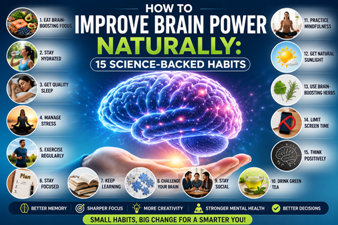
✅ Sleep 7–9 hours daily
✅ Exercise regularly
✅ Stay hydrated
✅ Eat nutrient-dense whole foods
✅ Include Omega-3-rich foods
✅ Consume adequate protein
✅ Choose complex carbohydrates
✅ Limit processed foods and sugar
✅ Manage stress effectively
✅ Maintain social and mental engagement
Conclusion
Brain health is not determined by a single superfood or supplement. Instead, it is the result of consistent lifestyle choices that support cognitive function over time.
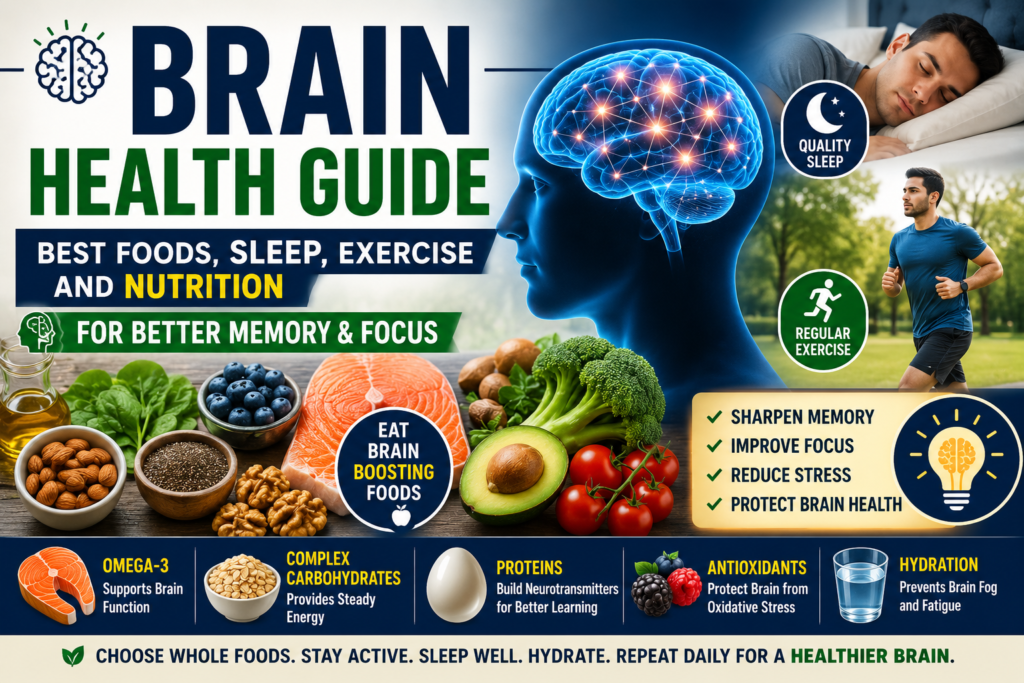
Quality sleep, regular exercise, proper hydration, Omega-3 fatty acids, complex carbohydrates, proteins, and antioxidants all work together to enhance memory, improve concentration, and protect against cognitive decline.
By treating the brain like a high-performance engine and providing it with the right fuel, individuals can improve productivity, academic performance, decision-making, and overall quality of life.